
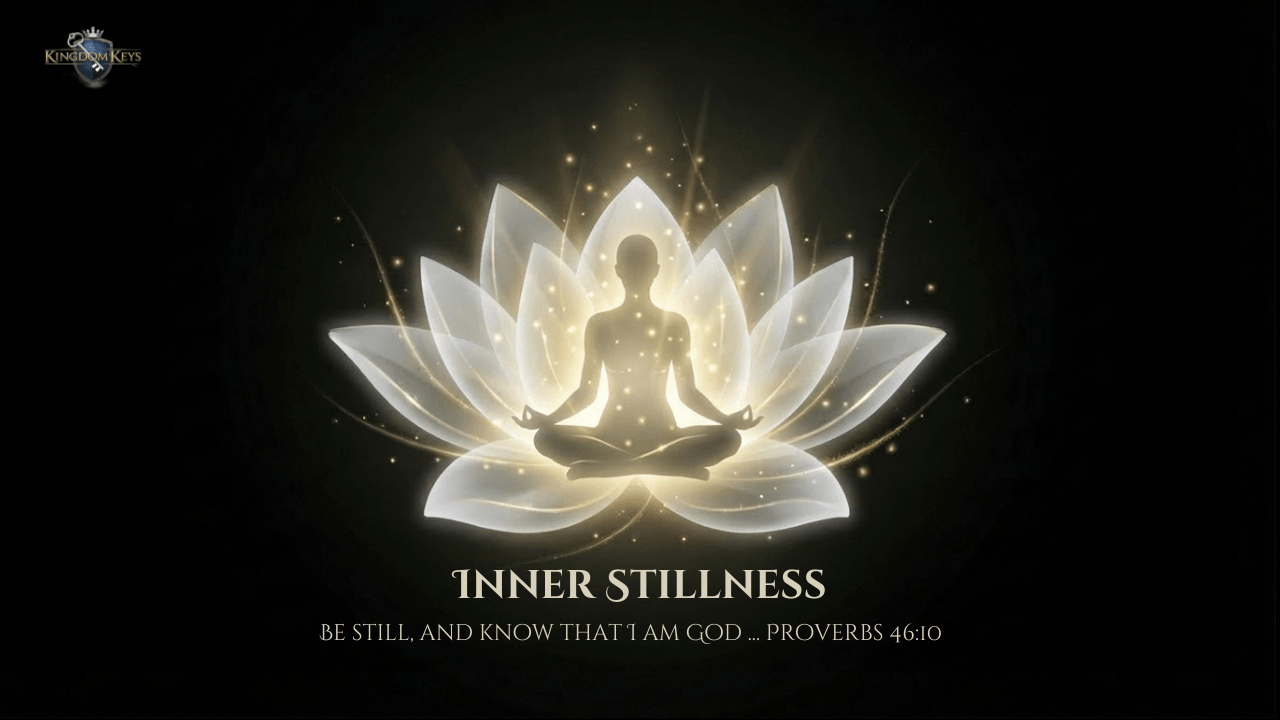
QUIETING THE MIND BEFORE STUDY
The Spirit speaks most clearly to a still heart.
The world around us is noisy.
Our thoughts, concerns, and inner agendas often create turbulence within.
To truly receive the treasures hidden within scripture, we must first prepare the inner ground by quieting the mind and softening the heart.
“Be still, and know that I am God.” — Psalm 46:10
Stillness is not emptiness.
Stillness is sacred readiness - creating space for divine truth to land gently and be fully received.
Pause here.
Breathe slowly.
Arrive inwardly before you proceed.
🕊️ What Is Meditation
Meditation, within the Kingdom Keys framework, is not about emptying the mind, disconnecting from God, or adopting unfamiliar spiritual practices.
It is a gentle practice of quieting outer distractions and calming inner mental activity so the heart and spirit can become more receptive to divine presence, wisdom, and truth.
For many traditional believers, the word “meditation” can feel unfamiliar or even misunderstood. Yet, Scripture consistently points to the importance of stillness, reflection, and spiritual attentiveness.
“Be still, and know that I am God.” — Psalm 46:10
Biblical stillness is not passive inactivity.
It is intentional awareness.
It is the quieting of the noise around us… and the settling of the noise within us.
Scripture also teaches that the natural or carnal mind struggles to perceive spiritual truth:
“But the natural man receiveth not the things of the Spirit of God… neither can he know them, because they are spiritually discerned.” - 1 Corinthians 2:14.
When the mind is overwhelmed, restless, or constantly occupied, it becomes more difficult to discern the gentle guidance, peace, and clarity that come from the Spirit.
This is why stillness is not optional for spiritual growth - it is essential.
Jesus Himself gave a powerful instruction regarding prayer:
“Enter into thy closet, and when thou hast shut thy door, pray to thy Father which is in secret…” — Matthew 6:6
From a deeper spiritual perspective, “shutting the door” is not only about a physical location.
It is also about quieting external distractions and stepping away from mental noise, inner dialogue, and constant activity of thought.
It is the intentional closing of the door to:
External noise
Mental overwhelm
Inner agitation
Distracting thought patterns
So the heart can become still, aware, and present before God.
Meditation, in this light, is not about escaping life or silencing the mind by force.
It is about gently centering the mind, calming the body, and becoming intentionally present.
Rather than striving to “empty” the mind, you are learning to:
Observe thoughts without being ruled by them
Release mental tension
Renew the mind in peace (Romans 12:2)
Become more aware of divine presence
Here, meditation is approached as a spiritually grounded practice of alignment - not a ritual, trend, or performance.
You are not disconnecting from God in stillness.
You are becoming more aware of Him.
You are not silencing your mind out of pressure.
You are allowing it to settle so spiritual clarity, discernment, and peace can emerge naturally.
In a world filled with constant noise, stimulation, and mental activity, meditation becomes a sacred pause - a quiet returning to stillness, awareness, and intentional communion with God.
To “shut the door” is not only to withdraw from outer noise,
but to quiet the restless activity of the mind and become present before God in stillness.
The Biblical Foundation of Stillness & Meditation
Stillness, reflection, and meditation are not foreign concepts within Scripture.
They are deeply woven into the spiritual life of those who sought clarity, wisdom, and communion with God.
Long before modern interpretations of meditation existed, Scripture encouraged believers to pause, reflect, and quiet the mind in order to remain spiritually aware and aligned.
“Be still, and know that I am God.” — Psalm 46:10
This call to stillness is not merely poetic language.
It is a spiritual invitation — to step away from mental striving, inner noise, and external distractions, and return to a posture of awareness and trust.
Another foundational instruction appears in the book of Joshua:
“This book of the law shall not depart out of thy mouth; but thou shalt meditate therein day and night…” — Joshua 1:8
Here, meditation is not described as empty thinking, but as intentional reflection and continual alignment with truth.
It is a practice of:
Remembering truth
Reflecting on wisdom
Renewing the mind
Staying spiritually attentive
Likewise, the renewal of the mind is emphasized in the New Testament:
“Be transformed by the renewing of your mind…” — Romans 12:2
Renewal does not occur in constant mental noise.
It often begins in moments of stillness, reflection, and intentional awareness.
Throughout Scripture, we see a consistent pattern:
God often speaks, guides, and restores not in chaos - but in quietness, stillness, and attentive presence.
Stillness allows the heart to settle.
Reflection allows truth to take root.
Awareness allows discernment to increase.
From a Kingdom Keys perspective, meditation is not about adopting something new.
It is about returning to a Biblical rhythm that has always existed:
Stillness before God
Reflection on truth
Renewal of the mind
Spiritual attentiveness
When the mind is constantly occupied and overstimulated, spiritual sensitivity can become clouded.
But when the mind is quieted and the heart is centered, clarity, peace, and discernment often become more accessible.
Meditation, therefore, is not a replacement for prayer or Scripture.
It is a supportive practice that creates space for deeper awareness, inner stillness, and alignment with divine truth.
It is not about striving to hear more.
It is about becoming still enough to discern clearly.
Stillness in Scripture is not inactivity -it is attentiveness, alignment, and quiet awareness before God.
Preparing the Heart & Mind for Stillness
Before entering meditation, it is important to gently prepare both the mind and the body.
Stillness is not something that is forced. It is something that is allowed.
Many people attempt to become still by trying to control their thoughts or silence the mind through effort.
This often creates more tension rather than peace.
Instead, preparation begins with a simple shift - from striving to allowing, from mental pressure to gentle awareness.
As shared earlier, Jesus instructed:
“Enter into thy closet… and when thou hast shut thy door…” — Matthew 6:6
This preparation is a living expression of that instruction.
To “shut the door” in meditation is not only about stepping away from external distractions,
but also about quieting internal noise — racing thoughts, mental tension, and constant inner dialogue.
It is the intentional decision to pause, become present, and create space for stillness.
You do not need a perfect environment.
You only need a willing posture.
Gentle Preparation for Stillness:
Find a quiet and comfortable place where you can sit without interruption
Relax your shoulders, jaw, and breath
Allow your body to settle naturally
Release the need to control every thought
Become aware of your breathing without forcing it
If thoughts arise, do not resist them harshly.
Simply observe them, allow them to pass, and gently return your attention to stillness.
This is not failure. This is part of the process. Stillness does not mean the absence of thoughts.
It means you are no longer led by them.
As the mind begins to settle, the heart becomes calmer, the body becomes more relaxed,
and spiritual awareness becomes more receptive.
In this state, meditation shifts from being a mental exercise to becoming a posture of quiet presence before God.
You are not striving to make something happen. You are creating space for clarity, peace, and alignment to emerge naturally.
Let this moment be simple.
Let it be unforced.
Let it be intentional.
Preparation is not about perfection. It is about gently closing the door to noise and opening the heart to stillness.
Enter Into Stillness: Guided Meditation Experiences
Meditation is not meant to be rushed, forced, or treated as a task to complete.
It is an intentional pause - a moment to step away from external noise, mental activity, and inner tension, and gently return to stillness.
After preparing the heart and mind, you are now invited to enter a space of quiet awareness.
These guided meditation experiences are designed to help you:
Slow the pace of your thoughts
Settle into calm awareness
Release mental and emotional tension
Become more present with God in stillness
Each session is created with a spirit-led and grounded approach,
ensuring that the focus remains on alignment, clarity, and peaceful awareness - not performance or pressure.
You are not required to “do” meditation perfectly.
You are simply invited to be present.
Allow the guidance, stillness, or gentle sound to support your focus as you:
Breathe naturally
Relax your body
Observe without striving
Rest in intentional awareness
If your mind wanders, gently return to stillness without frustration.
This is not distraction - it is part of the process of quieting the mind.
Let each session become a quiet space where:
the mind settles,
the heart softens,
and inner clarity begins to emerge naturally.
Preparation is not about perfection. It is about gently closing the door to noise and opening the heart to stillness.
🎧 Guided Meditation Samples
Select a meditation session below and allow yourself to enter stillness at your own pace.
(Headphones are highly recommended to reduce outside distractions.)
Guided Meditation: Entering Inner Stillness
Guided Meditation: Quiet the Mind & Release Tension
Silent Stillness Session (Tone-Based Meditation)
Evening Meditation: Resting in Peaceful Awarenes
🎧 Silent & Tonal Stillness Samples
Select a meditation session below and allow yourself to enter stillness at your own pace.
(Headphones are highly recommended to reduce outside distractions.)
Entering Inner Stillness
Tone-Based Session
Quieting the Mind & Releasing Mental Noise
Tonal Stillness Session
Resting in Stillness Before God
Sound-Based Meditation
Deep Calm & Nervous System Reset
Tonal Alignment Session
Living from Stillness in Daily Life
Meditation is not meant to remain confined to a quiet moment, a session, or a designated space of stillness.
Its deeper purpose is to shape how we think, respond, discern, and move throughout daily life.
Stillness is not merely something we practice. It is something we learn to carry.
In a world filled with constant noise, urgency, and mental activity, it is easy for the mind to become reactive, overwhelmed, and distracted.
Yet when we regularly return to stillness, something begins to shift within.
Thoughts become more measured.
Responses become more intentional.
Discernment becomes clearer.
Peace becomes more accessible.
This reflects the ongoing renewal of the mind described in Scripture:
“Be transformed by the renewing of your mind…” — Romans 12:2
Stillness supports this renewal by creating space between impulse and response, noise and clarity, reaction and awareness.
Rather than reacting from mental tension or emotional overwhelm, you begin to respond from a more centered and grounded place.
Living from stillness may look like:
Pausing before reacting in stressful moments
Becoming aware of inner dialogue instead of being led by it
Returning to calm breathing during tension
Choosing clarity over mental haste
Maintaining awareness of God’s presence throughout the day
In this way, meditation becomes less about a scheduled practice and more about a cultivated posture of awareness.
You are no longer only still during meditation sessions. You become more still in thought, speech, and response.
This aligns deeply with the instruction to “shut the door” - not only in private moments of prayer and reflection, but inwardly, by quieting mental noise and remaining attentive to truth and divine guidance.
Over time, consistent stillness nurtures:
Greater spiritual sensitivity
Emotional steadiness
Mental clarity
Peaceful discernment
Intentional living
You are not withdrawing from life through stillness. You are engaging life with greater awareness, wisdom, and alignment.
Stillness, then, is not an escape from responsibility. It is a strengthening of presence within it.
And as stillness becomes a regular practice, it gently transforms from a moment you visit… into a state you live from.
Stillness practiced consistently becomes clarity lived daily.
Continue Your Stillness Journey
Stillness is not something to visit once and leave behind.
It is a rhythm that deepens with consistency, intention, and gentle practice.
The brief samples on this page are designed to introduce you to the practice of stillness, mental quieting, and spiritually grounded meditation in a calm and accessible way.
Yet, stillness is most impactful when it becomes a regular part of your life - not only in moments of reflection, but as an ongoing posture of awareness, clarity, and alignment.
As you continue this journey, you may feel led to explore deeper and more extended meditation experiences, guided stillness sessions, tonal sound practices, and spoken prayer integrations that support:
Ongoing mind renewal
Inner calm and stability
Spiritual attentiveness
Intentional alignment in daily living
For this reason, a dedicated Meditation & Prayer Hub has been prepared within the Prayer Room to provide a more organized and immersive space for continued practice.
There, you will be able to access:
Guided meditation sessions
Silent and tonal stillness experiences
Spoken prayer integrations
Future extended audio resources and bundles
You are not required to rush the process.
You are simply invited to return to stillness as often as needed.
Whether for a brief moment of mental quieting, a deeper time of reflection, or a structured session of guided stillness, each return strengthens clarity, peace, and spiritual awareness.
Let this not become another task to complete, but a quiet practice to revisit.
A moment to pause.
A moment to center.
A moment to “shut the door” to noise and return to presence.
Stillness practiced consistently becomes clarity lived daily.
You are invited to continue your stillness journey within the Meditation & Prayer Hub.
Home | Guided Prayer & Meditation | Affirmations | Meditation & Prayer Hub | Submit A Prayer Request

May every key unlock new levels of faith, wisdom, and divine alignment within you.
“Thank you for being part of the Kingdom Keys family.”
© 2025 Kingdom Keys. All Rights Reserved.